- English
- French
- German
- Portuguese
- Spanish
- Russian
- Japanese
- Korean
- Arabic
- Greek
- German
- Turkish
- Italian
- Danish
- Romanian
- Indonesian
- Czech
- Afrikaans
- Swedish
- Polish
- Basque
- Catalan
- Esperanto
- Hindi
- Lao
- Albanian
- Amharic
- Armenian
- Azerbaijani
- Belarusian
- Bengali
- Bosnian
- Bulgarian
- Cebuano
- Chichewa
- Corsican
- Croatian
- Dutch
- Estonian
- Filipino
- Finnish
- Frisian
- Galician
- Georgian
- Gujarati
- Haitian
- Hausa
- Hawaiian
- Hebrew
- Hmong
- Hungarian
- Icelandic
- Igbo
- Javanese
- Kannada
- Kazakh
- Khmer
- Kurdish
- Kyrgyz
- Latin
- Latvian
- Lithuanian
- Luxembou..
- Macedonian
- Malagasy
- Malay
- Malayalam
- Maltese
- Maori
- Marathi
- Mongolian
- Burmese
- Nepali
- Norwegian
- Pashto
- Persian
- Punjabi
- Serbian
- Sesotho
- Sinhala
- Slovak
- Slovenian
- Somali
- Samoan
- Scots Gaelic
- Shona
- Sindhi
- Sundanese
- Swahili
- Tajik
- Tamil
- Telugu
- Thai
- Ukrainian
- Urdu
- Uzbek
- Vietnamese
- Welsh
- Xhosa
- Yiddish
- Yoruba
- Zulu
When we think about sourcing decorative solutions that deliver lasting impact without the maintenance overhead of living plants, artificial bamboo emerges as a strategic choice. Throughout my three decades working with artificial plant manufacturing, I've witnessed how the right Small Artificial Bamboo Plant transforms commercial environments while solving persistent procurement challenges. This guide speaks directly to wholesale distributors, event planners, and retail buyers who need dependable supply chains, quality assurance, and cost-effective solutions. Whether you're stocking inventory for seasonal peaks or building a private-label collection, understanding material composition, supplier capabilities, and application strategies makes the difference between a profitable partnership and costly setbacks.

Understanding Artificial Bamboo Plants: Key Knowledge for Buyers
The stiff plastic stems of older versions of fake bamboo plants have been replaced by much better ones. The fine venation patterns and natural color changes that make real bamboo leaves unique can now be copied using modern production methods. By mixing polyester cloth leaves with steel-reinforced stems, mixed materials are used to make plant models that can be used in business settings while still looking real.
Material Composition and Durability Standards
Three main types of materials are used to make high-quality fake bamboo. The framework is made of high-density polyethylene, which is both flexible and resistant to changes in temperature that are common in business areas. Combinations of silk and polyester leaf give the fabric a matte finish that gets rid of the plastic sheen. UV-stabilized treatments keep the color from fading in bright stores or near windows.
Heavy metals and toxic compounds are not found in products that meet RoHS and REACH compliance standards. This makes them safer for places like restaurants and hotels where kids may touch displayed items. In hotel lobbies, restaurants, and other public places where flame-resistant decorations are required by local fire codes, fire-retardant treatments that meet NFPA 701 standards become necessary.
Size Categories and Application Profiles
When room is limited, smaller desks (12 to 24 inches) can be used as workstation dividers or at welcome desks instead of bigger ones. Options in the middle range, between 24 and 48 inches, work well as floor-standing accents in store displays or as repeating elements in hallways. In hotel atriums and shopping mall common areas, full-size bamboo installations that are more than 48 inches tall serve as architectural focus points.
Dimensional freedom is very important for big buyers who have to meet the needs of a wide range of customers. Because wholesalers can change the height requirements, they can work with both small stores that need tabletop arrangements and big industrial builders who are planning biophilic installations. Because it's flexible, it makes supplies less complicated while reaching a wider range of customers.
How to Choose the Best Artificial Bamboo Plant for Your Needs
When choosing the right fake bamboo, it's important to make sure that the product's specs match the end-use setting and the customer's standards. The evaluation process looks at more than just how something looks. It also considers how well it's built, how often it needs to be maintained, and the total cost of ownership over the expected lifetime of the product.
Material Authenticity and Construction Quality
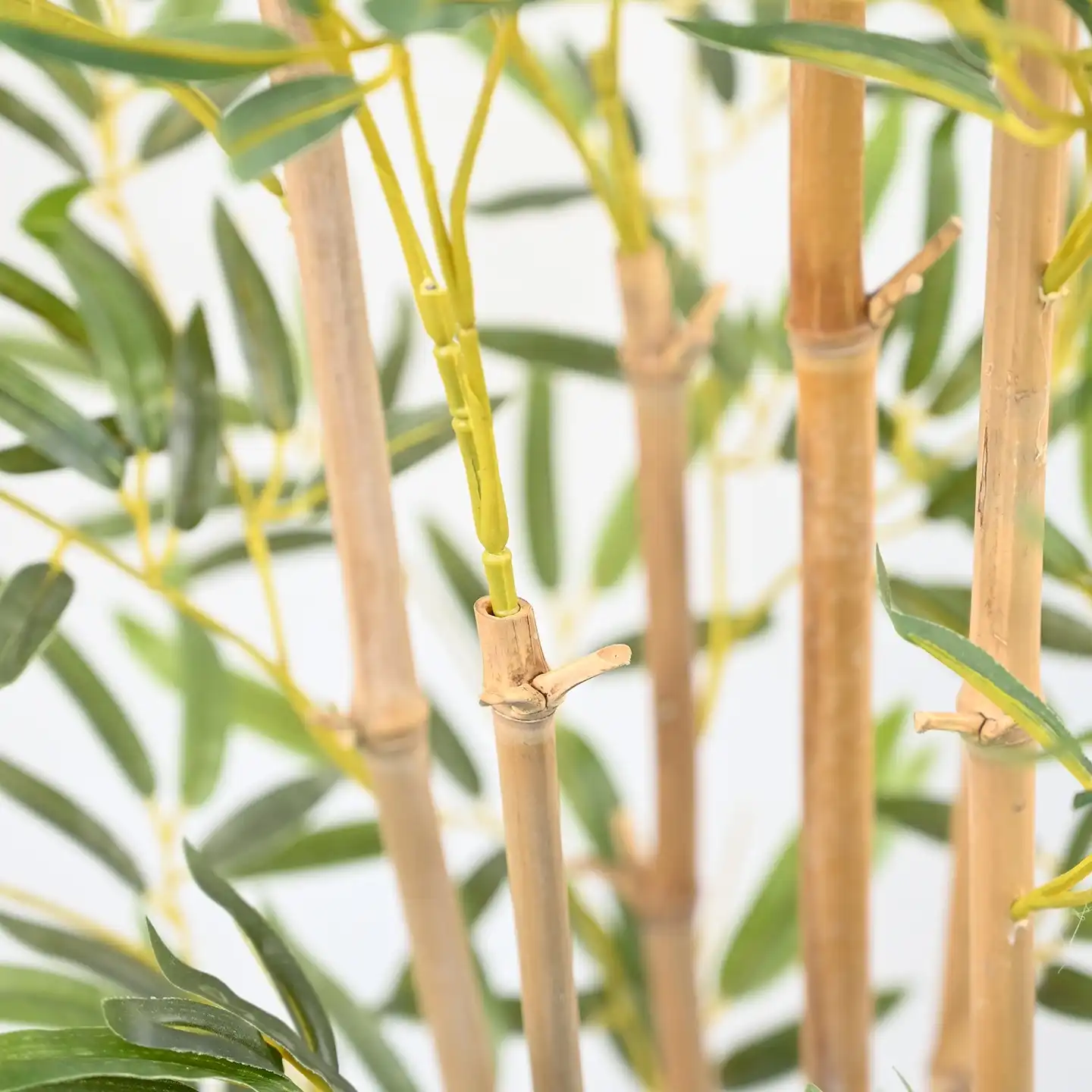
Looking at how leaves are attached shows right away how well the product was made. Premium specimens have joints that are heat-bonded or mechanically fastened behind the scenes so they don't come apart when they are being cleaned or handled. Lower-quality goods use glues that don't hold up well when they're touched over and over, which causes problems with upkeep and makes customers unhappy.
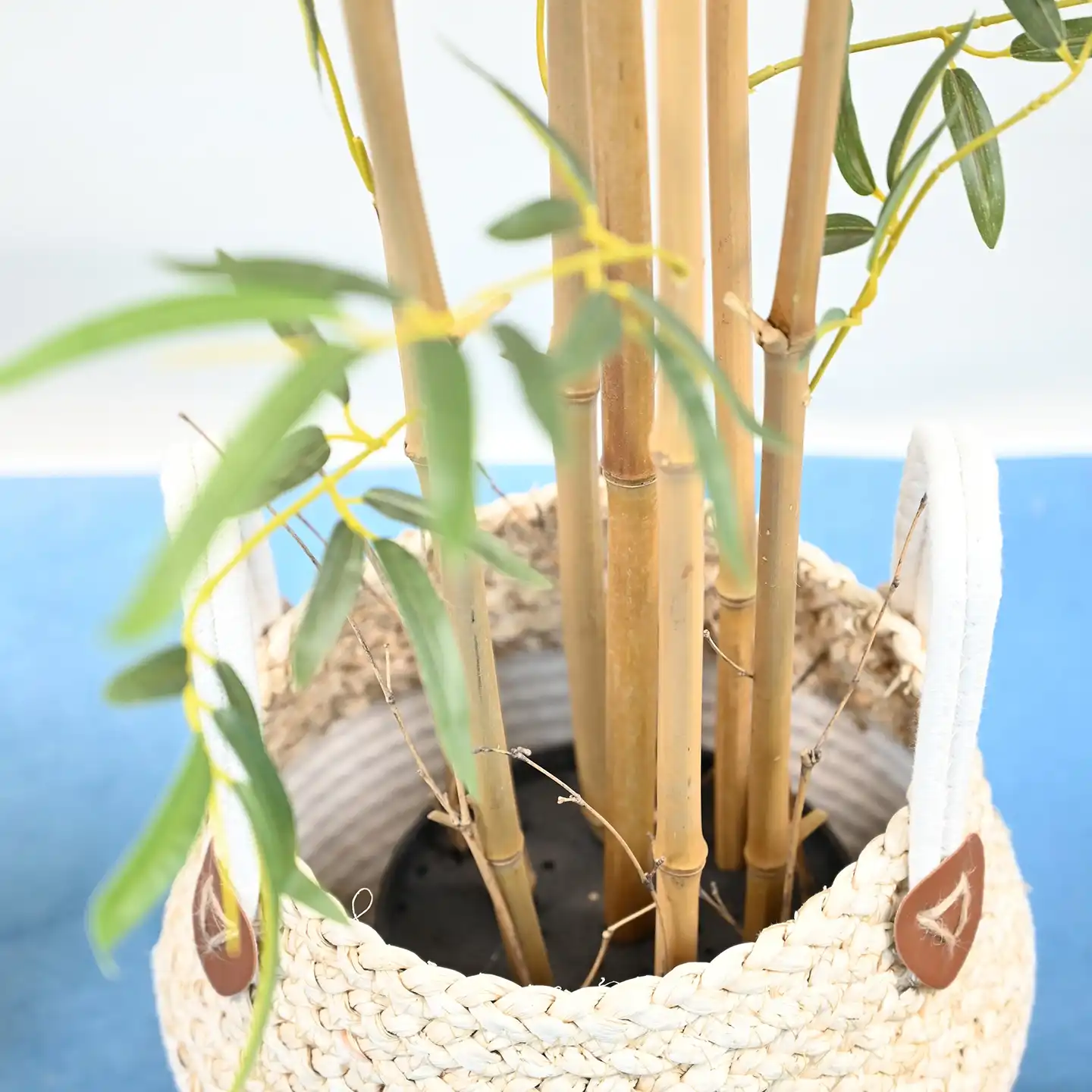
Professional-grade products are different from consumer options because of how their trunks are built. Natural bamboo culms that have been kiln-dried and fumigated give the product a real texture and meet phytosanitary import requirements. Synthetic PVC alternatives with galvanized wire cores are better at resisting water in damp places like spa reception areas or installations by pools, where natural materials would break down.
Pricing Structures and Volume Economics
Artificial bamboo, like the Small Artificial Bamboo Plant, is usually sold at wholesale prices that are based on how much you buy. Costs per piece are 40–60% higher for small runs of less than 50 units than for bulk orders of more than 500 units. Knowing the break points helps procurement managers time orders so that they meet regular demand cycles.
Different supplier networks have very different minimum order quantities. Direct ties with manufacturers usually require commitments of 200 to 300 pieces, but they offer price savings of 25 to 35 percent compared to distributor routes. MOQs for trading platforms can be as low as 20 to 50 units, which gives you a lot of freedom, but it also means that you can't make as many changes as you'd like.
Customization Capabilities and Lead Times
Private-label opportunities are very valuable for home decor brands and retail chains that want to make their product lines stand out. Customization can be done in many areas, such as pot styles, stem configurations, color palettes, and how the plants are packaged. OEM suppliers usually need 30 to 45 days to make the first order, but after the specifications are set, they only need 15 to 20 days to make subsequent orders.
Color matching is especially useful for event hire companies that want to make sure that all of their items look the same. Modern sellers let you change the colors of the leaves and containers to match any Pantone color. This way, new orders will look like they were bought at the same time as the old stock, even if they are bought months or years apart.
Maintenance and Care: Maximizing the Lifespan of Artificial Bamboo Plants
For bulk buyers, the return on investment is directly affected by following the right maintenance procedures. Even tho fake bamboo doesn't need to be watered, pruned, or treated for pests, there are still ways to care for it that will make it last longer and keep its good looks for years to come.
Cleaning Protocols and Frequency Guidelines
Accumulation of dust is the biggest problem with maintaining all types of fake plants. When you clean once a week with anti-static microfiber cloths, you get rid of surface dust before it sticks to UV-protective coats. Low-pressure settings on compressed air dusters get rid of dirt and dust from between leaves without hurting delicate attachments.
For high-traffic areas, deep cleaning every three months with light soap solutions diluted 1:10 makes them look new again. Stay away from harsh solvents and cleaners that contain alcohol because they damage polyester fabrics and remove protective treatments. Because grease and cooking aerosols build up in food service environments, restaurants and other hospitality businesses may need deep cleaning once a month.
Storage and Handling Best Practices
When managing seasonal goods, wholesale wholesalers need to make sure they follow the right storage rules to keep materials from deforming and breaking down. Stems stay straight and leaves don't wrinkle when they are stored vertically with little stacking weight. Temperatures between 50°F and 75°F and humidity levels between 40 and 60% are best for keeping things stable for long periods of time in climate-controlled buildings.
Using breathable fabrics instead of plastic sheets for protective wrapping stops moisture buildup that can break down glue and help mold grow on organic trunk parts. Proper packing lowers the risk of damage during shipping and makes it easier to use systems that rotate inventory so that older items move through distribution routes before newer ones.
Procurement Process Guide: How to Buy Small Artificial Bamboo Plants in Bulk
To find your way around supplier landscapes for Mini Artificial Bamboo Tree, you need to know about the different sourcing models and the benefits they offer for different business situations. Direct manufacturer partnerships are better than distributor networks in some ways, but each one is best for different business needs.
Direct Manufacturer Advantages
Partnering with factory operations gives you the most customization options and clear pricing. Manufacturers who control where their raw materials come from through quality checking can make changes to specifications that sellers can't. Buyers can plan to build up their inventory around busy times when they can see how much production is going on. This keeps them from running out of stock, which happens when sellers have to serve many competing clients.
Quality control doesn't happen at different checkpoints along the way; it happens at the source. Having ties with factories lets purchasing teams set up their own testing methods, such as checking the tensile strength of leaf clips, the stability of the product under UV light, and the accuracy of the measurements. This direct supervision lowers the number of defects and returns that cost a lot of money and make it hard to plan supplies.
Volume Pricing and MOQ Considerations
Understanding how costs are structured helps buyers figure out the best order size based on what they think demand will be. For most products, the 500-unit mark is when the cost per unit gets close to 10% of the biggest bulk savings. Buyers who serve regional markets may find that sharing containers with similar product categories can help them get better prices without having to keep too much inventory on hand.
The time of year when goods are bought affects both prices and production schedules. By placing orders 60 to 90 days before a period of high demand, you can secure production slots before there are problems with capacity. Manufacturers who manage production flow give priority scheduling and sometimes better prices to people who buy holiday decorations in the summer and start building up their inventory for the wedding season in January.
Certification and Compliance Verification
International buyers need to make sure that the seller's certifications of the seller meet the needs of the target market. BSCI social compliance checks, CE marking for sales in Europe, and California Proposition 65 testing for sales in the US are all requirements that can't be changed. Instead of taking verbal promises, ask for proof, because fines and delays at customs create more problems than they solve when you buy from sources that don't follow the rules.
Retail partners that care about the environment and business clients that are putting in place sustainability policies like eco-friendly approvals. In some market areas, products made with recycled materials or biodegradable parts fetch higher prices, but they also reach more customers than just people who buy fake plants.

Strategic Placement and Usage Tips for Artificial Bamboo Plants
To get the most business value out of fake bamboo installations, they need to be placed in a way that improves space flow and reinforces the brand's aesthetics. Approaches need to be customized for each location based on traffic patterns, visual sightlines, and user needs.
Office and Corporate Applications
Putting orderly bamboo plants next to entrance doors or at desk ends is a good idea for reception areas. The vertical layout makes you look up, which gives small halls the impression of more space. Mid-height varieties, which are 36 to 48 inches high, keep the visual link between reception desks while giving a light layer of privacy.
In open-plan workspaces, collaboration areas are set up with bamboo groupings instead of permanent walls that make it hard to change the layout. Three to five stem clusters give the impression of enough visual weight to define spaces while still keeping the open look that modern offices like. The natural green color scheme lowers the stress of screen glare and supports biophilic design principles that have been linked to higher productivity.
Hospitality and Retail Environments
Bamboo is strategically placed in restaurant dining areas to make smaller seating areas within larger floor plans. Putting clusters between booths or along walkways gives diners a sense of privacy without making it harder for waiters to see or blocking emergency exits. The fact that they don't need much care makes them especially useful in food service settings where live plants can be dirty.
In store window displays, fake bamboo is used as seasonal props that stay the same while the other items change. The evergreen look flows easily from spring awakening themes to summer freshness ads to fall harvest displays, so there is less need for full teardown and rebuilding, which costs a lot of money for visual marketing.
Conclusion
A successful purchase of a small artificial bamboo plant strikes a balance between quality requirements, the supplier's abilities, and a total cost analysis that takes into account the product's predicted lifecycles. Mixed-material construction gives commercial uses the durability they need, and advanced manufacturing techniques give it a realistic look that keeps the aesthetic credibility. Procurement professionals can build supplier partnerships that support growth as market needs change by knowing material compliance standards, customization timelines, and maintenance requirements. Buyers who understand that the original purchase price is only one part of the total ownership costs will have a competitive edge. In the end, suppliers' dependability and the longevity of the product will determine profits.
Frequently Asked Questions
1. What is the typical lifespan of a Small Artificial Bamboo Plant in commercial settings?
In controlled indoor settings, high-quality fake bamboo structures usually look good for 5 to 8 years. Due to handling wear, displays in high-traffic areas may only last 4 to 6 years. On the other hand, displays in protected areas can last longer than 10 years with proper upkeep.
2. How do artificial bamboo plants compare environmentally to live plants?
Artificial choices don't need water, pesticides, or dirt disposal, and they don't leave behind the carbon footprint that comes with replacing plants all the time. The cost of making energy is spread out over many years of use, but recycling at the end of its useful life is still less common than compostable organic options.
3. Can artificial bamboo withstand outdoor placement?
Models that are UV-stabilized and made to be used outside can handle changes in temperature and sun exposure, but most of the stock is made for indoor use. Check the weather-resistance specs before putting something outside to keep it from fading and breaking down too quickly.
Partner with Blossom Sparkling for Your Artificial Bamboo Needs
Blossom Sparkling has been making specialized products for over 30 years and can help business clients who are looking for dependable artificial bamboo plant providers. Because we sell directly from the factory, there are no markups for middlemen. You can also choose from a wide range of colors, sizes, and materials, which is something that retail distributors can't do. Every product meets the standards for RoHS, REACH, CE, and BSCI compliance. This makes it easy for foreign buyers to get their goods through customs and gives regulators trust.
We keep a large amount of ready-to-ship goods to help with quick delivery, and we can also make custom items with 7–30-day turnaround times. Our team provides the quality, stability, and supply reliability that wholesale businesses need, whether you need different types of Small Artificial Bamboo Plants for your e-commerce inventory, large-scale setups for hotel projects, or private-label development for retail brands. Email our export team at export@blossomsparkling.com to talk about your buying needs and get full quotes.
References
1. Chen, L., & Wang, M. (2021). Sustainable Materials in Artificial Plant Manufacturing: Environmental Impact Assessment. Journal of Industrial Ecology, 25(3), 412-428.
2. Harrison, P. (2020). Commercial Interior Landscaping: Design Strategies for Artificial and Live Plant Integration. Architectural Design Press.
3. International Trade Centre (2022). Global Market Analysis: Artificial Flowers and Plants Trade Patterns 2020-2022. Geneva: ITC Publications.
4. Martinez, S., & Thompson, R. (2019). Material Science in Decorative Manufacturing: Polymer Applications and Durability Testing. Materials Engineering Quarterly, 18(2), 87-104.
5. Nguyen, T. H. (2023). B2B Procurement Strategies in the Home Décor Industry: Supply Chain Optimization. Business Management Review, 34(1), 56-73.
6. Williams, K., & Foster, J. (2021). Biophilic Design in Corporate Environments: Artificial vs. Living Plant Effectiveness Studies. Workplace Psychology Journal, 12(4), 203-219.