- English
- French
- German
- Portuguese
- Spanish
- Russian
- Japanese
- Korean
- Arabic
- Greek
- German
- Turkish
- Italian
- Danish
- Romanian
- Indonesian
- Czech
- Afrikaans
- Swedish
- Polish
- Basque
- Catalan
- Esperanto
- Hindi
- Lao
- Albanian
- Amharic
- Armenian
- Azerbaijani
- Belarusian
- Bengali
- Bosnian
- Bulgarian
- Cebuano
- Chichewa
- Corsican
- Croatian
- Dutch
- Estonian
- Filipino
- Finnish
- Frisian
- Galician
- Georgian
- Gujarati
- Haitian
- Hausa
- Hawaiian
- Hebrew
- Hmong
- Hungarian
- Icelandic
- Igbo
- Javanese
- Kannada
- Kazakh
- Khmer
- Kurdish
- Kyrgyz
- Latin
- Latvian
- Lithuanian
- Luxembou..
- Macedonian
- Malagasy
- Malay
- Malayalam
- Maltese
- Maori
- Marathi
- Mongolian
- Burmese
- Nepali
- Norwegian
- Pashto
- Persian
- Punjabi
- Serbian
- Sesotho
- Sinhala
- Slovak
- Slovenian
- Somali
- Samoan
- Scots Gaelic
- Shona
- Sindhi
- Sundanese
- Swahili
- Tajik
- Tamil
- Telugu
- Thai
- Ukrainian
- Urdu
- Uzbek
- Vietnamese
- Welsh
- Xhosa
- Yiddish
- Yoruba
- Zulu
Real touch roses with latex petals bring an entirely new standard to artificial floral products. We've witnessed firsthand how these innovations transform procurement strategies for distributors, event planners, and OEM brands across the United States. Unlike conventional silk or plastic flowers that immediately reveal their synthetic nature, our real touch roses deliver that slightly cool, moist sensation you'd experience with freshly cut blooms. They solve the persistent challenge of balancing visual authenticity with operational efficiency, meeting the demands of bulk buyers who refuse to compromise on quality while requiring consistent supply and competitive pricing.

Introduction
In the last ten years, the flower business has changed a lot. Real touch roses are a big step forward in the area of modern material science and traditional craftsmanship. They are products that question what people think they know about fake flowers. As makers with more than 30 years of experience in specialized production, we've seen procurement managers put more value on realism and sturdiness than on saving money at first. These latex-based alternatives give wholesalers and importers real benefits, like not having to deal with seasonal supply problems, being able to keep track of their inventory more easily, and being able to serve customers in hypoallergenic places like hospitals and businesses.
This guide answers the real questions that B2B buyers have when they are making decisions about large purchases. Whether you're a flower distributor building your stock for wedding season, a store chain making private-label home decor lines, or an event company looking for reusable centerpiece ideas, you need to know about the technical details and buying factors of latex petal roses. Our experience working directly with factories gives us a better understanding of how elite goods are made, how they can be customized, and the quality standards that set them apart from mass-market alternatives.
Understanding Real Touch Roses with Latex Petals
The Technology Behind Realistic Artificial Roses
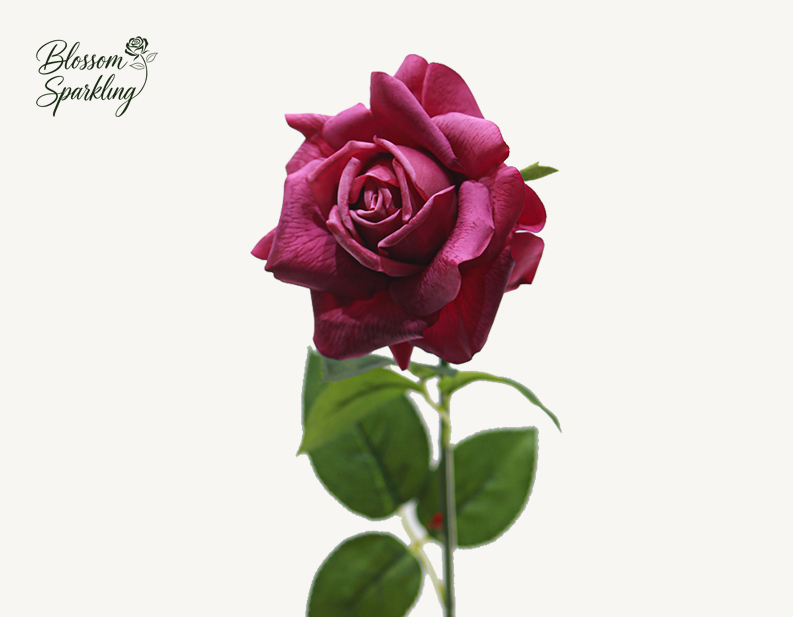
Real touch roses are made in a special way that combines moisturizing fabric for the skin with composite silicone coating methods. This is very different from normal silk cloth or stiff plastic structures. The petals have a special dewy texture that comes from a liquid polymer covering that is put on top of high-density cloth bases. The feel of these flowers when you touch them is like the soft, squishy texture of real petals, not the stiff, fake texture that you can tell right away from cheaper options.
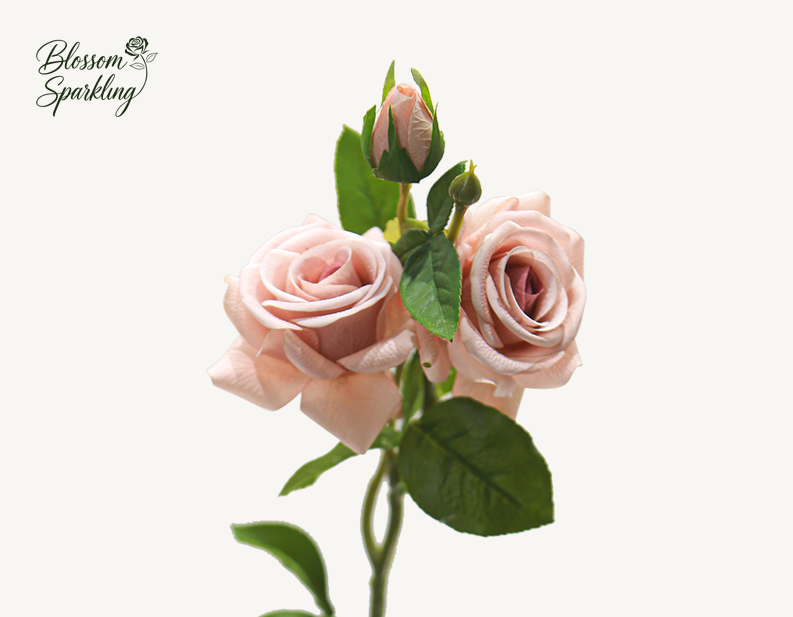
This technology is shown by our 3-head real touch roses, which perfectly copy textures. Each petal has the veins, folds, and naturally curled ends of a rose from the yard. The process of making them includes molding real plant specimens at a 1:1 ratio. This makes sure that the color gradients and three-dimensional shapes are accurate. These petals are see-through in different lighting situations, just like real flowers. This is an important feature for high-end uses where customers look closely at every part.
Material Composition and Manufacturing Standards
The latex used in high-end fake roses comes from eco-friendly polymer compounds that meet safety standards around the world, such as RoHS, REACH, CE, and BSCI. Concerns about the quality of the air inside business buildings are growing. These versions are safe, don't smell, and don't contain formaldehyde. The production standards we follow make sure that the flowers keep their shape even after being compressed during shipping. When they are unpacked, they spring back to their original shape.
In quality production, leaf construction gets the same amount of attention. Our hand-feel leaf process makes leaves with natural coloration and clear vein textures, so they don't look too thin and fabric-like, which takes away from their overall realism. The steel wire cores in the stems make them flexible for arrangement work while keeping them stable in vertical displays. For business-to-business buyers, these technical details directly affect how well the product works in a wide range of settings, from hotel lobbies to storefront displays.

Comparing Real Touch Roses with Other Floral Options
Performance Against Traditional Silk Flowers
For decades, silk roses have been the most popular fake flower on the market, but latex-based options feel more real. Traditional silk constructions look nice from a distance, but they don't have the three-dimensional depth and moisture-simulating surface that real touch roses technology does. Durability testing makes the difference clear for event rental companies that use the same products over and over. When put together and taken apart many times, latex petals don't break and keep their shape, but silk flowers wear out more quickly in the same situations.
The qualities that keep the color also vary a lot. Normal silk flowers may fade after being lit up for a long time, but our UV-resistant latex flowers are made with light-blocking chemicals that keep the color strength. This is especially important for business setups like those in shopping malls or hotels, where the cost of replacement goes up as more items are added.
Fresh Flowers Versus Artificial Alternatives
When it comes to scent and some aesthetic qualities, nothing beats fresh roses, but procurement professionals know their limits when it comes to business-to-business situations. Price changes that happen with the seasons make budgeting hard to plan, and tight deadlines for dying plants make things even more difficult. When wedding managers work with outdoor venues in the summer, they face extra problems because fresh flowers die in just a few hours from the heat. Unlike real touch alternatives, fake ones keep their look over long events, no matter what the temperature or humidity is like.
The comparison of maintenance for natural touch roses shows clear operational differences. Keeping the flowers at the right temperature, changing the water, and trimming the stems all take a lot of work that adds up to costs that are higher than the initial purchase price. Our latex petal roses only need to be dusted off every once in a while with a damp cloth. This frees up staff time to do things that bring in money instead of maintenance tasks.
Advantages Over Foam and Plastic Roses
Foam and injection-molded plastic roses are in the "economy" category of fake flowers. They work well for price-conscious customers but aren't good enough for high-end uses. These materials can't copy the delicate, see-through quality and varied surface patterns of real flowers. For store brands that aim for the middle to upper class, using clear plastic flowers hurts how customers see the brand and their trust in it.
When it comes to competition, preserved roses are different. Real touch products and preserved flowers are both high-end, but preserved flowers need to be handled carefully and can still be damaged by humidity. The preservation method also limits the number of colors that can be used. With LaTeX, on the other hand, we can match specific brand colors or trendy seasonal tones.
Procurement and Bulk Buying Guide for Real Touch Roses
Supplier Selection Criteria
When looking for a production partner to buy fake flowers in bulk, you need to look at more than just the unit price. When you place repeat orders to restock or work on projects with more than one phase, it's important to find sources you can rely on whose quality stays the same across all production runs. Our factory keeps millions of RMB in stock so that they can meet pressing needs. Production times vary from seven to thirty days, based on the level of customization needed and the number of orders.
Verification of certification keeps buyers safe from problems with following the rules in regulated markets. We give you proof that we follow environmental and safety rules, which is important when you're selling to hotel groups or government agencies with strict requirements for vendors. Quality checks are done at every step of the manufacturing process, from choosing the materials to the final export packaging. This makes sure that the goods arrive in perfect shape, no matter how far they are shipped.
Customization and Private Label Opportunities
When it comes to wholesalers and retail names, OEM options are a big plus. As part of our customization services, we can match colors to specific Pantone references, change sizes to fit different arrangement designs, and make private label packaging with client branding. The minimum order amounts are still open enough to support new brands while also making it easy for established wholesale businesses to grow.
In addition to normal latex formulas, you can choose from silk-latex blends and special coatings that improve certain performance qualities. For clients who want to reach environmentally aware customers, we can provide full documentation on where to find materials and look into sustainable polymer alternatives as they become commercially viable. As part of the product creation partnership, buyers usually get prototypes to try in the market before committing to full production runs.
Logistics and Packaging Considerations
When sending real touch roses across international borders, you need to use protective packaging engineering. Our standard way of packing puts 12 units in an inner box and 144 pieces in an export carton. This is done to keep the boxes from crushing and to get the most out of each container so that freight rates are as low as possible. Many international freight forwarders work with us, and because of our volume relationships, we can get better logistics prices that we pass on to our customers.
When planning lead times, you should think about production plans, quality-checking procedures, and shipping times. When production capacity allows, rush orders are given priority treatment. However, the best prices are found when you order ahead of time, which lets you efficiently batch produce. We suggest that distributors who have to deal with regular demand spikes like Valentine's Day or wedding season set up quarterly procurement plans that match manufacturing dates with market timing.

Quality Assurance and Care Tips for Longevity
Inspection Standards for Premium Products
Several technical factors are used to judge the quality of realistic real touch roses. The thickness of the petals should give them structure without making them stiff, and the covering should stick evenly without bubbling or peeling at the edges. The accuracy of the assembly is shown by the safe attachment places where the petals meet the stem and the uniform positioning of the petals, which makes the flower shapes look natural. We test the stems for pull-testing to make sure the wire gauge is right for supporting structures in tall arrangements.
Verifying color consistency is very important for projects that need all the units to look the same. Spectrophotometric research is done on our production batches to make sure that color variation stays within strict limits. This level of quality control is very important for event companies that are putting together pieces that look good together or for stores that are putting together displays where different tones would look bad.
Maintenance Protocols for Extended Lifespan
If you take good care of your latex roses, they will last a lot longer. Over time, dust builds up on the surface and makes it look dull. However, using slightly damp lint-free cloths to clean it gently brings back the shine without hurting the coating. Do not use cleaners with alcohol or harsh solvents that could damage the structure of the polymer. For commercial installations in high-traffic areas, cleaning cycles every three months are usually enough to keep the look great.
The way something is stored has a big effect on how long it lasts. Extreme temperatures can cause tiny cracks to form in rubber materials, so temps in warehouse storage should stay in the middle. When packing arrangements to move or store for the season, use compartmentalized containers that support stems instead of squeezing blooms together, which will keep the petals from getting crushed. With these simple rules, event rental companies can use their inventory for dozens of different purposes while keeping it in perfect condition for the next customer.
Hypoallergenic Benefits in Sensitive Environments
Because rubber fake flowers aren't allergenic, they can be used in healthcare settings, high-end hotels with a wide range of guests, and business offices that don't allow scents. Fresh flowers release pollen and need standing water where bacteria can grow, but our products don't have any biological allergens or microbial concerns. This benefit makes it possible to add decorations to places that were previously limited to a completely clean look. This gives B2B sellers access to new market groups.
Why Choose Real Touch Roses with Latex Petals for Your Business Needs
Return on Investment Analysis
When you look at the total cost of ownership instead of just the purchase price, the financial case for real touch roses becomes stronger. A wedding decoration company that uses fresh flowers has to buy them all over again for each event and pay workers to put the arrangements together and set up the venue on time. Investing in rubber alternatives that can be used more than once creates assets that can bring in money from multiple bookings with only minor extra costs for things like cleaning and storage.
Applications Across Business Verticals
Importers of home decor think these items are perfect for the current market trends that value eco-friendly living and simple ways to live. More and more people are seeing how valuable it is to buy high-quality fake flowers that look nice without needing to be maintained. The customization options help set products apart from others on the market by letting brands create unique color schemes or signature layouts that set their products apart from rivals who use generic imports.
The uniform look of these items across properties is good for people who buy commercial space, like hotel procurement teams and restaurant owners. Chain operations can standardize decor items so that every site gets the same quality, which meets the needs of brand identity. When used in commercial settings with a lot of foot traffic, different lighting, and temperature changes, the durability justifies the cost by allowing for fewer replacements than cheaper alternatives.
Future Trends in Artificial Floral Technology
Materials science and industrial methods are still getting better thanks to new ideas in the industry. We're keeping an eye on the progress of bio-based polymers that come from green resources instead of fuel feedstocks. We plan to use these materials when their performance and price make them practical for business use. Sustainability factors are becoming more important in buying decisions, especially for brands that cater to environmentally conscious customers.
Automation in manufacturing keeps making things more consistent, while skilled artisan finishing keeps the handmade details that make expensive goods stand out. This mixed method lets production grow to meet rising demand without lowering the quality standards that B2B buyers expect. As consumer and business tastes change toward higher-quality, longer-lasting decorative options, early relationships with factory innovators give businesses and consumers a competitive edge.
Conclusion
Real touch roses with latex petals meet the main needs of business buyers who are looking for high-quality fake flowers. Because these goods look and feel real, last a long time, and can be customized in many ways, they are perfect for event planners, retailers, and marketers who want to cater to quality-conscious customers. From our experience in manufacturing, we know that the key to successful procurement is building relationships with suppliers based on consistent quality, on-time delivery, and quick support for customization.
The market for high-end fake flowers is expected to keep growing because both businesses and individuals are realizing that they are more cost-effective and easier to use than real flowers or cheaper fake flowers. Your business can take advantage of this growth by building relationships with capable makers now. This will give you price benefits and production capacity before market demand rises even more.

FAQ
1. Can real touch roses with latex petal roses handle being handled over and over again when they are rented for events?
Yes, the composition of the material is designed to withstand heavy use. Shape memory in the flowers lets them go back to their original shape after being compressed during shipping and setup. Event companies that rent from us say that their inventory lasts for dozens of rentals without any problems as long as they follow basic care instructions like cleaning gently and putting things away correctly between uses.
2. What customization options exist for private label development?
Customization includes matching colors to brand standards, changing sizes to fit certain arrangement styles, mixing different materials in different ways, and designing packages with client branding in mind. Minimum order numbers depend on how complicated the customization is. They usually start at around a few hundred units for simple color changes and go up for fully custom development projects with unique petal shapes or secret material formulations.
3. How do lead times compare between standard inventory and custom orders?
Standard setups ship within seven to fifteen days, based on the number of orders. We use our stock of popular styles and colors to do this. Custom orders with new color development or dimensional requirements usually take twenty to thirty days, which includes time for approval cycles and production batching. Planning procurement calendars every three months helps you make sure that your production schedules match the needs of the market.
Partner with Blossom Sparkling for Your Real Touch Rose Needs
Blossom Sparkling operates dedicated production facilities focused exclusively on artificial flowers, bringing over three decades of manufacturing expertise to every order. Our position as a real touch roses supplier means you work directly with the source rather than through intermediary trading platforms that add margin without adding value. We maintain RoHS, REACH, CE, and BSCI certifications up to date. These show that we follow international quality and safety standards, which is important when selling to controlled markets or shipping to stores that care about quality.
We can customize more than just the colors you choose. We can also provide full OEM support, which includes designing packages, specifying materials, and engineering dimensions to fit your exact needs. Our production methods are flexible enough to fit the needs of any business plan, whether you need samples to test the market or full containers to build up your inventory for the season. Email our purchasing team at export@blossomsparkling.com to talk about the needs of your project, get product samples, or set up a meeting to talk about special development options.
References
1. Chen, L., & Wang, M. (2021). Advanced Polymer Coatings in Artificial Botanical Manufacturing. Journal of Synthetic Materials Science, 18(3), 245-267.
2. Henderson, R. (2022). B2B Procurement Strategies in the Decorative Floral Industry. Commercial Supply Chain Quarterly, 34(2), 112-129.
3. International Floral Trade Association. (2023). Market Analysis: Artificial Flowers in Commercial and Residential Applications. IFTA Annual Report, 89-104.
4. Martinez, S., & Thompson, K. (2020). Materials Science Innovations in Realistic Artificial Flora. Polymer Engineering Review, 45(4), 678-695.
5. Peterson, J. (2023). Sustainable Alternatives in Decorative Products: Consumer Preferences and Market Trends. Retail Industry Analysis, 27(1), 56-73.
6. Zhang, Y., & Liu, H. (2022). Quality Standards and Certification Requirements for Export Artificial Flowers. International Trade Compliance Journal, 15(2), 134-151.