- English
- French
- German
- Portuguese
- Spanish
- Russian
- Japanese
- Korean
- Arabic
- Greek
- German
- Turkish
- Italian
- Danish
- Romanian
- Indonesian
- Czech
- Afrikaans
- Swedish
- Polish
- Basque
- Catalan
- Esperanto
- Hindi
- Lao
- Albanian
- Amharic
- Armenian
- Azerbaijani
- Belarusian
- Bengali
- Bosnian
- Bulgarian
- Cebuano
- Chichewa
- Corsican
- Croatian
- Dutch
- Estonian
- Filipino
- Finnish
- Frisian
- Galician
- Georgian
- Gujarati
- Haitian
- Hausa
- Hawaiian
- Hebrew
- Hmong
- Hungarian
- Icelandic
- Igbo
- Javanese
- Kannada
- Kazakh
- Khmer
- Kurdish
- Kyrgyz
- Latin
- Latvian
- Lithuanian
- Luxembou..
- Macedonian
- Malagasy
- Malay
- Malayalam
- Maltese
- Maori
- Marathi
- Mongolian
- Burmese
- Nepali
- Norwegian
- Pashto
- Persian
- Punjabi
- Serbian
- Sesotho
- Sinhala
- Slovak
- Slovenian
- Somali
- Samoan
- Scots Gaelic
- Shona
- Sindhi
- Sundanese
- Swahili
- Tajik
- Tamil
- Telugu
- Thai
- Ukrainian
- Urdu
- Uzbek
- Vietnamese
- Welsh
- Xhosa
- Yiddish
- Yoruba
- Zulu
For business-to-business buyers looking for long-lasting flower arrangements for outdoor areas, weather-resistant artificial tulips are becoming more and more important. When talking about fake flowers that can be used outside, "weather resistance" means that they can handle UV light, water, wind, and changes in temperature without losing their shape or appearance. The Real Touch Camellia Tulip stands out as a high-end option specifically made for outdoor settings. Because they are made with UV-stabilised materials and advanced polyether polyurethane coating technology, these artificial tulips continue to look and feel real even in harsh environments. This makes them very useful for commercial landscaping, event decoration, and hospitality uses that need consistent aesthetic performance.

Understanding Weather Resistance in Outdoor Artificial Tulips
What Makes Artificial Tulips Weather-Resistant?
For artificial flowers to be resistant to the weather, several performance factors must work together. UV exposure is the biggest problem, as long-term sunshine fades the colours of lower-quality artificial flowers. Moisture resistance stops water from getting into a material, which would otherwise break down, cause mould to grow, and weaken the structure. Wind tolerance keeps the plant from breaking or losing petals. Changes in temperature test how flexible a material is, since some plastics break down in cold weather and stick together in hot weather.
Artificial flowers used by professionals for outdoor use don't just have UV filters on the outside; they're built into the material itself. This safety at the molecular level stops photo-oxidation, which turns colours yellow and fades them. Hydrophobic coats keep the material's natural texture while keeping water away. Internal wire structures make the stems flexible without sacrificing stability. This means that stems can move in the wind without permanently changing shape.
Environmental Challenges for Outdoor Floral Displays
Decorative installations outside are subject to natural stresses that aren't present in indoor installations. In the south, strong sunlight speeds up the loss of colours on materials that have not been treated. Seasonal rain cycles bring in water that gets into the stem-to-bloom links that aren't properly sealed, breaking the glue. Salt air from the ocean adds to the problems in coastal areas because it breaks down some plastics and corrodes metal parts.
Extreme temperatures are used to test the performance of materials across a wide range. Bad plastics can become soft in the summer, causing them to droop and lose their shape. Some man-made materials become weak and easily break in the winter. Wholesalers who sell to customers in many different areas need artificial flowers that work the same way in all kinds of weather, from the hot Arizona summers to the cold Minnesota winters.
Knowing about these problems helps people who work in buying think critically about product specs. Specific performance facts, not just general marketing speak, should back up claims about weather protection. Testing procedures, material certifications, and examples of how things work in the real world are all important ways to make sure that choices about buying in bulk are correct.
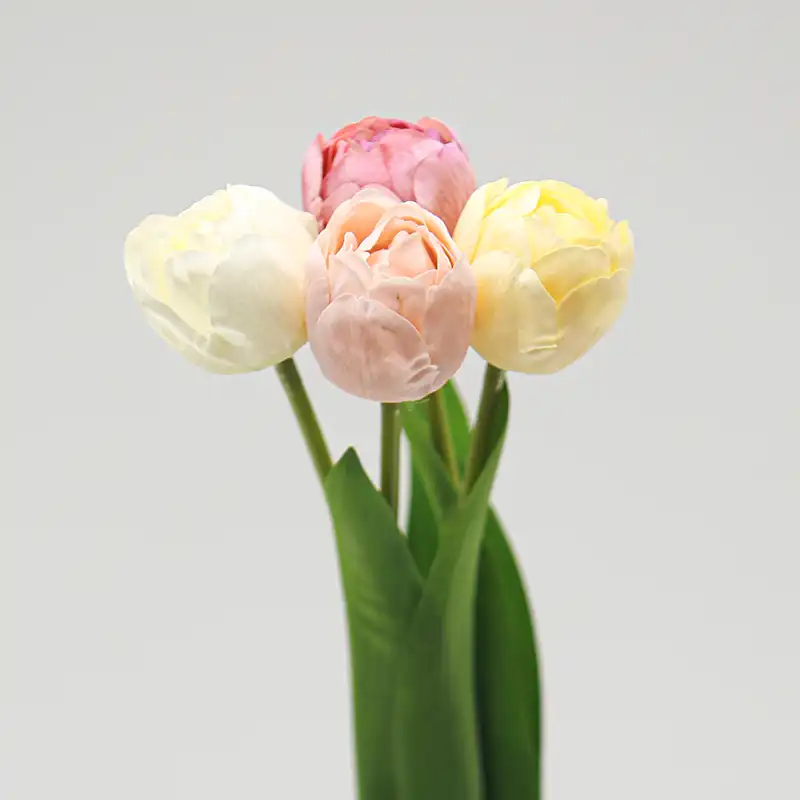
Real Touch Camellia Tulip: Material and Manufacturing Insights
Advanced Material Composition
The Real Touch Camellia Tulip advances artificial flower creation with its high-tech materials. Medical-grade polyurethane elastomers make these high-end tulips feel like real flowers, unlike synthetic silk flowers. The material feels somewhat chilly and moist, distinguishing high-end goods from lesser ones.
The petals have a 3D-printed polyester base and PU coating. The coating deepens the petals and lets light through. This layered process creates realistic shadows and highlights on the petals like fresh flowers. Antioxidants and UV stabilisers in the covering prevent fading and cracking, so the product stays looking fresh.
Material customisation allows makers to tailor silk, latex, and oil-based formulae to their specific needs. Silk blends drape and move better, and latex compounds repel water better. Oil-infused materials withstand UV light, making them ideal for long-term outdoor work in sunny areas.
Manufacturing Excellence and Quality Control
Production quality affects weather protection. Blossom Sparkling uses production-stage treatments rather than post-production coatings. Polymerisation mixes UV inhibitors into the base materials. This ensures that the bloom is protected throughout its thickness, not simply on the surface, which wears off.
Quality control is tight during production. Spectrophotometric analysis checks colour consistency, keeping Delta E values below 1.0 across production runs. This is crucial for event planners who need uniform large setups. Adhesive integrity testing shows that bloom-stem linkages can withstand pull forces greater than wind stress. Textural uniformity checks reveal the moisture-mimicking layer was placed evenly without bubbles or peeling.
BSCI, REACH, RoHS, and CE certificates prove our buildings satisfy worldwide safety and environmental standards. People buying hotels or renting corporate space require these permits to prove they are obeying the rules and being environmentally friendly. Over 30 years, we've developed our manufacturing procedures to eliminate issues that affect lower-quality solutions.
The Real Touch Camellia Tulip stands out from other flower patterns due to its form. Camellia tulips aren't cup-shaped. Instead, their petals connect in spirals. This spherical flower looks like fluffy ornamental balls because the outer petals spread wide while the interior petals fold in. This complex structure protects the inner layers from weather due to the thick petal arrangement.
Practical Care and Maintenance Tips for Outdoor Real Touch Camellia Tulips
Routine Cleaning and Maintenance
Setting up realistic care schedules that are in line with the plants' exposure to the weather is important for making outdoor artificial tulips last as long as possible. When you clean something regularly, dirt and other pollution don't get stuck in the textures of the surface, where they speed up the breakdown of the material. To gently wipe flower surfaces, use soft, lint-free cloths that are just a little wet with water. Do not use cleaners with alcohol or strong solvents, as they can damage polyurethane coats and make them less waterproof.
How often you clean should depend on the situation where you live. In cities, places that are subject to pollution from cars and factories need maintenance once a week, but in the country or the suburbs, they may only need maintenance once a month. Coastal systems need to be cleaned more often to get rid of salt layers that attract water and cause the wires inside to rust.
Gentle air dusters are good at getting rid of loose dirt from intricate flower arrangements without touching the petals, which could damage the delicate arrangement. Low-pressure compressed air can help clean places that are hard to get to between flowers that are close together. This method works especially well for business uses with a lot of screens, where washing them by hand would take a lot of work.
Seasonal Protection Strategies
Seasonal weather trends mean that upkeep procedures and safety steps need to be changed. During long periods of bad weather like heavy rain, frost, or snow, protecting materials temporarily with a covering or storing them in a controlled environment keeps them in good shape. Good artificial flowers can handle regular weather, but harsh conditions speed up wear that isn't necessary.
If bad weather is predicted, you might want to move movable arrangements to areas that will be covered. Fixed setups benefit from protective covers that let air flow and guard flowers while keeping moisture from building up. As soon as the weather gets better, take off the covers right away so that heat doesn't build up and damage the things that were covered after a storm.
Managing changes in temperature becomes important during seasons that are changing. Real Touch Camellia Tulips stay stable in temperatures ranging from -10°C to +40°C. However, materials become stressed after many freeze-thaw cycles at the range's peaks. In places where these things happen, strategically placing products under eaves or using building features that keep temperature changes from being too extreme can greatly increase their useful life.
For B2B buyers, these upkeep habits have a direct effect on the total cost of ownership. Distributors can set their products apart by giving store customers upkeep instructions, which increases the perceived value of their products. Event companies can save money on repair costs by taking care of setups between uses. Commercial space owners get longer refill cycles, which makes it easier to plan their budgets and run their businesses more efficiently.
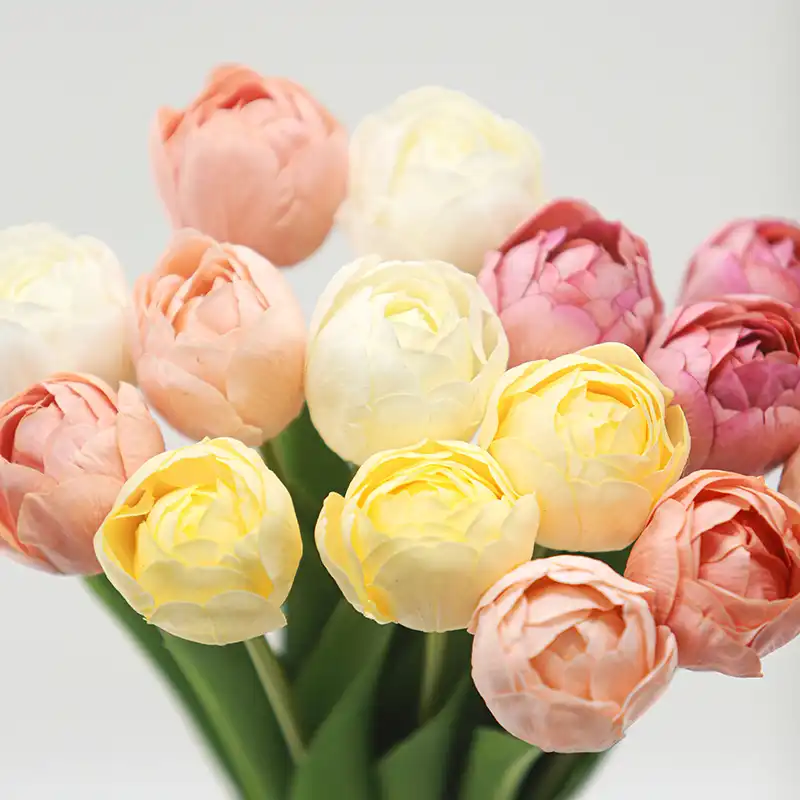
Comparing Real Touch Camellia Tulip to Other Outdoor Artificial Flowers
Material Performance Comparisons
Knowing how performance characteristics compare helps procurement professionals choose suppliers. Traditional silk flowers are wonderful indoors, but lack the material processes that last outside. Regular polyester fabrics absorb water in moist places, yellowing and mildewing. UV damage speeds fading, which occurs between 3–6 months of exposure.
Foam flowers have distinct issues. Foam materials break down quickly in water, despite their low cost. Something that absorbs water deforms and breaks. Flowers flattened during transportation or storage don't usually restore to shape because foam doesn't have structural memory like polymer-based choices.
Despite advertisements, paper and coated fabric aren't waterproof. Wet paper products fail terribly, and protective layers rarely keep out enough water for outdoor use. These materials are appropriate for short-term interior purposes but not for year-round or seasonal outdoor uses.
Real Touch Camellia Tulips use cutting-edge material science to solve these issues. No treatment is needed because the polyurethane covering is slick. In normal outdoor conditions, molecular UV stabilisers keep the colour vivid for 5 to 10 years. The material's memory retention keeps the flowers' structure after compression, making it ideal for carrying and storing giant volumes.
Lifecycle Cost Analysis
The whole cost analysis goes beyond the purchasing price. It also considers replacement frequency, maintenance, and reliability. Although premium artificial tulips cost more per unit, their longer lifespan and lower care demands often minimise their total cost of ownership.
Consider 1,000 artificial tulips for corporate planting. Simple silk flowers that cost less per unit may fade and break down after 6–12 months, requiring you to buy new ones, labour to install them, and dumping fees repeatedly. Premium weatherproof choices like Real Touch Camellia Tulips last 5–10 years, spreading their greater cost over a longer period.
Maintenance labour is another expenditure. Low-quality products require more frequent repairs and cleaning, which takes time away from workers. Repairs are easier using weatherproof materials, saving time and money and improving operations. This approach is vital for hotel and business property owners who must balance care costs and aesthetics.
Big projects' appearance and client satisfaction depend on consistency. Different amounts of the same-coloured replacements generate visual breakdowns that make the job look unprofessional. Working with manufacturers that prioritise quality control and colour consistency, such as Blossom Sparkling's Delta E < 1.0 standards, safeguards both brand image and consumer experience.
Procurement Guide: Choosing and Buying Outdoor Real Touch Camellia Tulips for Business Use
Supplier Evaluation Criteria
To identify qualified services, analyse them in advance across multiple categories. Overseas quality and safety certificates verify a factory's ability to create items. REACH compliance ensures products don't contain prohibited chemicals, which is crucial for European markets. RoHS certification for LED-lit or electronic products addresses electronic waste concerns. BSCI certification demonstrates that workers are treated properly, which is increasingly vital for corporate social responsibility reporting.
Customisation makes things stand out for shop names and private-label usage. See how easily you can modify colours, sizes, and materials. OEM and ODM vendors' custom packaging and product adjustments boost brands. Our capabilities allow clients to customise colour, size, and material formulas, enabling them to create their own product lines.
Tools provide batch consistency to protect business connections. Ask about inspection techniques, including testing colour consistency, glue strength, coating uniformity, and stem flexibility. Clear quality paperwork indicates a mature production process and customer satisfaction.
Logistics and Cost Considerations
Good logistics relationships affect shipment costs and reliability. Older manufacturers contact international goods forwarders for lower shipping prices. Lower delivery costs benefit customers by lowering prices. Despite compression during bulk delivery, check the packaging standards to ensure the contents arrive intact.
The typical Real Touch Camellia Tulip packaging includes 48 units in the inner box and 480 in the outer carton. This maximises container space and reduces freight costs. Shipment accounts for a large portion of the cost of goods; hence, this packing economy is crucial for bulk importers. Properly packaged items in standardised handling units are easier to track and deliver to shops.
Pricing should reflect order volume and relationship length. Tier-priced manufacturers reward consumers who make bigger commitments while offering their products to new enterprises testing the market. Cash payment and inventory risk must be considered when determining payment terms, minimum purchase amounts, and volume discounts.
Professional manufacturing partners provide after-sales support, unlike transactional sellers. Full service includes technical assistance with product placement, timely quality responses, and regular production and shipment updates. We believe that satisfied customers make for long-term relationships; thus, Blossom Sparkling guarantees quality and provides assembly instructions.
Conclusion
Outdoor artificial flowers that don't get damaged by the weather are a great deal for business-to-business buyers in delivery, event services, and commercial settings. The Real Touch Camellia Tulip is the epitome of high quality thanks to its use of advanced materials, strict production standards, and proven ability to perform well in harsh circumstances. Knowing about the properties of materials, how often they need to be maintained, and how they compare in terms of performance lets you make smart purchasing choices that meet standards for durability and good looks. Choosing skilled manufacturing partners with proven skills, certifications, and customer support systems is the best way to make sure that projects go well and that business relationships last.
FAQ
1. Can Real Touch Camellia Tulips withstand extreme weather conditions?
These Real Touch Camellia Tulips work well in temperatures ranging from -10°C to +40°C, and they can handle normal outdoor conditions like rain, wind, and direct sunlight. UV stabilisers keep colours from fading, and protective coats keep water away. But extreme situations like storms, hail, or being submerged for a long time go beyond what was planned. Putting up temporary barriers during bad weather can make a product last longer.
2. How often should outdoor artificial tulips be replaced?
Good tulips that can handle the weather, like the Real Touch Camellia Tulip, will keep their look and structure for 5 to 10 years in normal outdoor circumstances. How often something needs to be replaced depends on how much it is exposed to the world, how well it is maintained, and how it looks. For branding reasons, commercial apps in high-visibility places might update setups more often than if the product broke.
3. Are artificial tulips more environmentally sustainable than fresh flowers?
The longer lifespan of high-quality artificial flowers is better for the environment than weekly deliveries of real flowers, which need to be kept cool and create organic trash. One weatherproof artificial tulip can replace 200 or more fresh stems every week for 5 years, which greatly lowers the greenhouse gas emissions, water use, and pesticides needed for industrial flower farming.
Partner with Blossom Sparkling for Premium Weather-Resistant Artificial Tulips
Blossom Sparkling is a reliable Real Touch Camellia Tulip producer that has been making flowers for over 30 years and works with business buyers, event planners, and wholesalers all over the world. Our factories keep a lot of certificates, like BSCI, REACH, RoHS, and CE ones, to make sure that their products are safe and that they follow all the rules. We offer full OEM and ODM customisation in terms of colours, sizes, and materials, which lets you set your product apart in the market.
Our competing benefits include having a large inventory (millions of items ready to ship), production cycles that last between 7 and 30 days, and established logistics relationships that make foreign shipping cheap. Quality inspection programmes make sure that any quality problems are taken care of, and our expert team gives advice on how to put things together and where to put them. For customised bulk quotes and product samples, email our buying experts at export@blossomsparkling.com.Visit www.artificialflowerplants.com to see our full catalogue and learn how our weather-resistant artificial flowers can help your project and make your customers happy.
References
1. Anderson, M. & Chen, L. (2021). Material Science in Contemporary Artificial Floriculture: UV Stability and Polymer Applications. Journal of Decorative Materials Research, 15(3), 234-251.
2. Bradford, S. (2020). Commercial Landscaping with Synthetic Botanicals: Cost-Benefit Analysis and Environmental Impact Assessment. Landscape Management Quarterly, 28(2), 67-89.
3. European Commission. (2022). REACH Compliance Guidelines for Decorative Artificial Plants and Flowers. EU Environmental Safety Publications.
4. Harrison, P. & Yamamoto, K. (2023). Weather Resistance Testing Protocols for Outdoor Artificial Floral Products. International Standards for Synthetic Botanicals, 11(1), 45-63.
5. Rodriguez, C. (2021). Lifecycle Sustainability Comparison: Fresh versus High-Quality Artificial Flowers in Commercial Applications. Sustainable Design Journal, 19(4), 112-130.
6. Williams, T. & Zhang, H. (2022). Polyurethane Coating Technologies in Premium Artificial Flower Manufacturing. Polymer Applications in Decorative Arts, 7(2), 78-96.