- English
- French
- German
- Portuguese
- Spanish
- Russian
- Japanese
- Korean
- Arabic
- Greek
- German
- Turkish
- Italian
- Danish
- Romanian
- Indonesian
- Czech
- Afrikaans
- Swedish
- Polish
- Basque
- Catalan
- Esperanto
- Hindi
- Lao
- Albanian
- Amharic
- Armenian
- Azerbaijani
- Belarusian
- Bengali
- Bosnian
- Bulgarian
- Cebuano
- Chichewa
- Corsican
- Croatian
- Dutch
- Estonian
- Filipino
- Finnish
- Frisian
- Galician
- Georgian
- Gujarati
- Haitian
- Hausa
- Hawaiian
- Hebrew
- Hmong
- Hungarian
- Icelandic
- Igbo
- Javanese
- Kannada
- Kazakh
- Khmer
- Kurdish
- Kyrgyz
- Latin
- Latvian
- Lithuanian
- Luxembou..
- Macedonian
- Malagasy
- Malay
- Malayalam
- Maltese
- Maori
- Marathi
- Mongolian
- Burmese
- Nepali
- Norwegian
- Pashto
- Persian
- Punjabi
- Serbian
- Sesotho
- Sinhala
- Slovak
- Slovenian
- Somali
- Samoan
- Scots Gaelic
- Shona
- Sindhi
- Sundanese
- Swahili
- Tajik
- Tamil
- Telugu
- Thai
- Ukrainian
- Urdu
- Uzbek
- Vietnamese
- Welsh
- Xhosa
- Yiddish
- Yoruba
- Zulu
Professionals in buying are increasingly turning to specialised makers that produce real touch roses that look and feel like the real thing. With their advanced polymer coatings and careful workmanship, these high-end plant copies make flowers that look exactly like the real thing. When you buy directly from factory-based sellers like Blossom Sparkling, you can be sure of regular quality control, competitive wholesale prices, and the freedom to make changes that trading platforms can't offer. Working with experienced makers gets rid of problems like inconsistent colouration, late shipments, and limited branding options that happen in retail channels. This is true whether you're a wholesaler looking for big inventory or an event company needing seasonal stock.
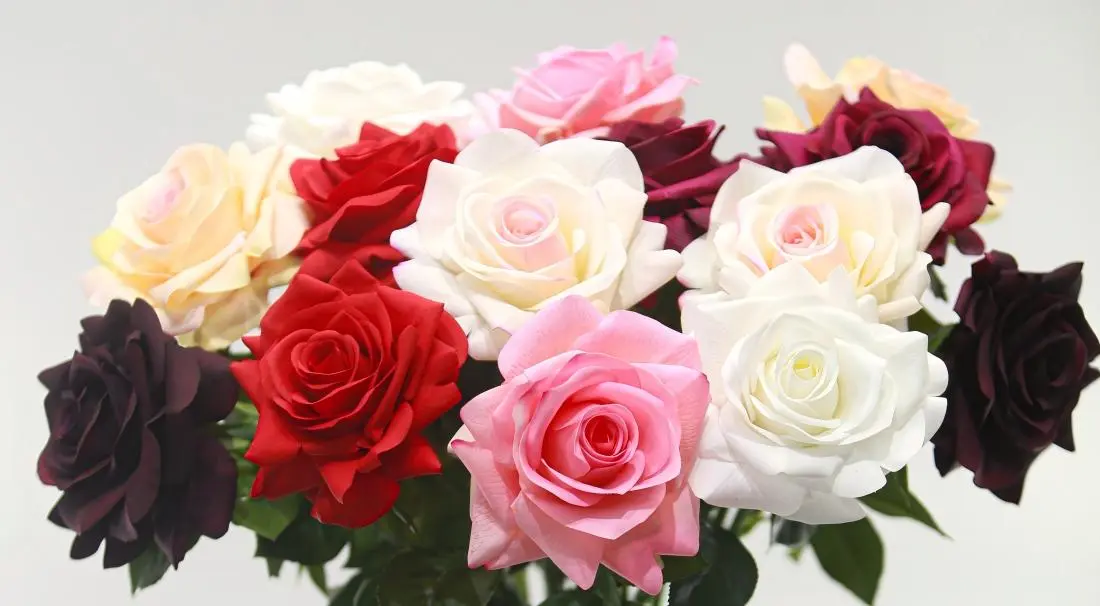
Understanding Real Touch Roses and Their Advantages
The stiff, plastic-looking stems of artificial roses from many years ago have changed a lot. Modern real touch roses represent a significant advance in plant modelling technology. They use moisturising bionic technology to make them look and feel just like the real thing. The key is in how they are made: premium materials like silk, latex, and special polymer coatings are used to make petals that feel slightly cool and damp, like the fleshy texture of newly cut flowers.
Why Does Material Composition Matter?
Longevity and realism depend on the material used. Medical-grade silicone or polyurethane coats are put on silk or high-density cloth bases to make high-end fake roses. This hybrid design keeps its shape, so flowers can bounce back after being squished during shipping or storage. In contrast to traditional foam roses that dry out or latex roses that feel like rubber, these new materials stay flexible even after years of use. The layer also protects against UV light, keeping the colours from fading like cheaper options do after just a few months.
Commercial Durability and Reusability
Procurement managers highly value artificial flowers because they give a great return on investment. A good stem can last through many event cycles, keeping its shape and colour for a long time, while fresh flowers would die after just a few days. When making elaborate centrepieces that need to be set up ahead of time, wedding planners really like how long-lasting these fake arrangements are—they look beautiful whether they are put together three days or three hours before an event. Hotels and restaurants can avoid the random changes that come with buying fresh flowers at different times of the year by using the same decorations in all of their locations.
Health and Environmental Benefits
Artificial roses are useful in business settings for reasons other than cost. They get rid of allergen contact, which is critical in healthcare situations and places that serve sensitive guests. Mould can't grow in still water, and soil-borne germs don't spread. Sustainable fake flowers replace the carbon footprint of weekly fresh flower supplies, cold storage, and getting rid of wilted blooms. This is because people want to be kind to the environment. RoHS and REACH guidelines are followed in modern production to make sure that goods are safe for any business use, don't contain formaldehyde, and aren't toxic.

Where to Find High-Quality Real Touch Roses: Top Sourcing Channels?
To navigate the fake flower market, you need to know the pros and cons of each buying method. Your choice should depend on the number of orders, the level of customisation you need, and the time frame you have.
Direct Factory Partnerships
For bulk buyers, getting straight from makers is the best way to get the best deal. Factory relationships eliminate markups on goods sold by middlemen and give customers access to customisation options that aren't available through retail outlets. Manufacturers with a lot of experience keep many different product lines in stock, which lets them quickly fill big orders during busy times. Blossom Sparkling and other long-established production facilities have fine-tuned quality control procedures to ensure thousands of stems are uniform. There is direct contact with production teams that know the technical details and can change the materials used, the colour gradients, or the stem sizes to meet your exact needs.
Wholesale Platforms and Trade Marketplaces
Online B2B markets are good places to find new suppliers, but you need to be cautious when choosing which ones to use. Platforms bring together products from many makers, allowing you to compare specs and prices side by side. Buyers should give more weight to providers whose certifications have been checked, whose photos of products clearly show close-ups of textures, and who are clear about their minimum order numbers. You can get a feel for the texture of the petals, the accuracy of the colours, and the quality of the building before making big purchases at trade shows and industry events.
Regional Distributors and Import Specialists
Established wholesalers make things easier for buyers who care more about speed than lowering costs as much as possible. They keep domestic stock that is sent within days instead of weeks, which is helpful for restocking between container orders. Distributors who know the local rules take care of the import paperwork and make sure that it is followed, which makes administrative tasks easier. However, the products they sell are usually limited to a carefully chosen group of available styles, rather than the full range of customisation options that a factory relationship offers.
Comparing Real Touch Roses: Things to Consider Before Purchasing
For buying to work well, it needs to be carefully evaluated in several different areas. Comparing prices at first glance can be misleading if you don't look into secret costs and differences in quality.
Material Authenticity and Construction Quality
Pay close attention to the coating on the petals of affordable real-touch fake roses bulk. High-quality roses have a smooth, slightly sticky surface with no cracks or peeling edges. The coating should stick to the base cloth without any bubbles or separation for affordable real-touch fake roses bulk. The number of petals makes a big difference. Real garden roses have 60–80 stacked petals that give them depth, while cheap imitations have 20–30 flat petals that look clearly fake, even in affordable real-touch fake roses in bulk. Check how the stem is put together. Good stems have flexible steel wire lengths that are strong enough to hold tall arrangements without drooping, and they are covered in green tape that looks like real wood and has a believable texture, especially in affordable real-touch fake rose bulk.
Color Consistency and Gradient Realism
From the centre to the edge of a natural rose petal, the colour changes slightly, giving the flower a depth that can't be achieved with single-tone dyes. High-quality fake roses look like this by colouring them in several steps that add colours gradually. Ask for samples from different production batches to make sure they are all the same; colour movement between batches indicates poor quality control. The colours should look rich and saturated in a range of lighting situations. They should stay vibrant in both natural and artificial light without looking dull or washed out.
Customization, Flexibility, and Minimum Orders
Customisation and order numbers are limited in different ways by different providers. Some makers want you to order at least 240 pieces of each colour, while others are more flexible and will accept orders of a mix of colours. Find out if customisation goes beyond choosing a colour and includes changing the shape of the petals, the length of the stem, or the way the flowers are packaged for private-label arrangements. Figuring out these factors early on keeps people from misunderstanding each other and lets you make a good budget for the whole cost of buying, which includes any costs for tools or setup for special requirements.
How to Choose the Best Real-Touch Roses for Your Procurement Needs?
The first step in strategic selection is to match your business needs with what the provider can do. For each business plan to work, the products and ways of working together must be different.
Defining Your Application Requirements
Event decoration companies need roses that look great in pictures and can handle being handled by several setup teams. Retail brands need their visual appearance to be the same in hundreds of stores, so batch-to-batch colour matching is a must. OEM buyers look for suppliers who can take design ideas and turn them into standards that can be manufactured. They also want sampling methods that can go through quick changes to improve prototypes. Hospitality buyers look for roses that last a long time and are easy to take care of. They like roses that UV light doesn't damage and that don't need much dusting in places with a lot of foot traffic.
Evaluating Supplier Capabilities
Check out the supplier's operating structures as well as the quality of their products. How well they can grow with your business depends on how much they can produce. For example, makers who keep millions of dollars in stock can handle pressing restocking orders that smaller workshops can't handle. Lead times are very different, ranging from 7 days for items that are in stock to 30 days for items that are fully customised to your needs. Logistics partnerships are just as important as business relationships. When suppliers work with well-known goods forwarders, they get better shipping rates and more reliable arrival times. Ask them about their quality control procedures, such as how they handle fault reports and what percentage of their production is inspected.
Building Long-Term Supplier Relationships
The best methods for buying things treat sellers more like partners than just transactional vendors. Clear information about expected demand helps makers plan their production schedules, which could lead to better prices or faster delivery during busy times. Continuous improvement is guided by regular comments about how the product works in your specific uses. Suppliers who care about your business will share information with you about new products, new materials, or predictions of yearly trends that help you plan your supplies.
Why Does Blossom Sparkling Lead in Real Touch Rose Manufacturing?
After thirty years of specialised production, Blossom Sparkling has become a trusted partner for buying real-touch roses around the world. Our factories only make plant copies, and we're in charge of every step of the process, from choosing the raw materials to packing them for export. This vertical integration makes sure that the standard is always the same, which is hard to do with contract manufacturing.
Technical Excellence and Product Innovation
Our Real Touch Tea Rose is a great example of the new ideas that are driving our product development. These roses have big, cup-shaped blooms with lots of stacked petals that are tightly wrapped in the middle and then spread out into full three-dimensional structures. The tips of the outer petals are clearly wavy and curled, which looks like natural flower designs and adds a beautiful sense of movement to arrangements. We make it look so real by using moisturising bionic technology and special treatments that make the petals feel like they are brand new. The colours flow easily from the middle to the edges, which keeps the fabric from looking dull after only one stage of dying. By making exact copies of living examples, you can get vein patterns with lots of detail, natural shapes, and the ability to see through things in different lighting conditions.
The ability to customise meets the wants of a wide range of customers. Clients choose the materials (like silk, rubber, or oil), the sizes by following our size rules, and the colours from our large selection. Standard packing rates of 24 pieces per inner box and 240 pieces per shipping carton make logistics more efficient. For private label projects, we can also do custom packaging. It can be used for decorating your house, making picture props, styling events, wedding flowers, festival displays, and long-term hospitality installations.
Manufacturing Standards and Compliance
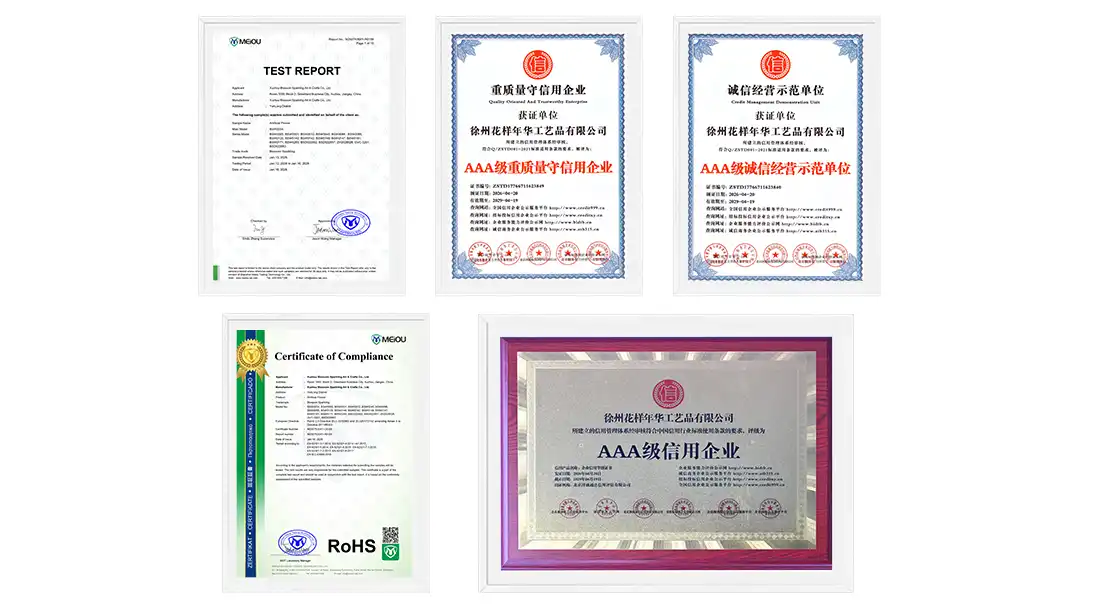
Our dedication to international standards is shown by our quality certificates, such as RoHS, REACH, CE, and BSCI compliance. Our eco-friendly polymer products don't have any formaldehyde, don't smell bad, and don't contain any toxic chemicals. These certificates are more than just paper documents; they show that your company follows strict testing procedures and picks only the safest materials. This protects your brand's image and makes sure that your products are safe everywhere. These checks, which speed up the legal approval process, are especially valued by procurement teams that work with stores that serve European or North American markets.
Operational Advantages for Bulk Buyers
Our production system is set up to be flexible and large. We can quickly meet standard requirements because we keep a lot of inventory on hand, and our 7–30 day production rounds let us handle special orders without too many delays. When you work with a number of foreign goods forwarders, you can get better shipping rates that help you figure out your landed costs. We can change more than just the looks of a product; we can change colours, sizes, materials, and building details to make it stand out and help you place it in the market. After-sales help includes promises that any quality problems will be fixed and expert advice on how to put things together and where to put them so that they look their best.
Conclusion
To find high-quality fake roses, you need to carefully consider the materials, the supplier's skills, and the possibility of a long-term relationship. Real touch roses have changed business decoration by giving items a real look and feel that can withstand heavy use at events, in stores, and in permanent installations. Direct connections with manufacturers offer the most value because they allow for cheap pricing, easy customisation, and reliable quality control. When you're looking at suppliers, give more weight to those that show scientific know-how through advanced production technologies, compliance with international safety standards, and an operational system that allows for growth on a large scale. With the right relationship, buying goes from being a necessary evil to a strategic edge that makes you more competitive.

FAQ
1. Are real touch roses truly allergy-friendly for commercial spaces?
Because these fake flowers don't have any pollen, they're perfect for places like hospitals, restaurants, and business offices where guests with allergies need to be catered to. Fresh flowers release allergens and need to be changed often, which helps bugs grow. Synthetic flowers look nice without putting your health at risk.
2. How long do high-quality artificial roses maintain their appearance?
When grown in normal business settings, high-quality roses with the right UV-resistant coatings and strong construction will keep their colour and shape for years. Event companies say they use the same material for dozens of weddings, and hospitality setups look good for three to five years before they need to be replaced. Fresh flowers and cheaper fake flowers that fade or break down within months are not even close to this long-lasting option.
3. What minimum order quantities should buyers expect?
For manufacturing efficiency reasons, the minimum order quantity is usually around 240 pieces per standard. However, sellers who are flexible can handle mixed assortments of different colour versions. Knowing these limits during the first talks keeps people from having unrealistic expectations and lets you make a correct project budget that takes into account the number of needs.
Partner with a Trusted Real Touch Roses Manufacturer
Blossom Sparkling wants to buy workers to see the difference in quality that comes from 30 years of specialised manufacturing. As a well-known seller of real touch roses, we offer full support from the first sample to ongoing production partnerships. Our factory-direct price gets rid of markups that aren't necessary, and our ability to customise goods makes sure they perfectly fit your market positioning. You can email Daniel at export@blossomsparkling.com to get catalogues of our Real Touch Tea Rose collection products, technical specs, or model arrangements that show what the collection looks like. You can look at all of our products and receive thorough quotes by going to www.artificialflowerplants.com. We're ready to talk about how our production infrastructure, quality certifications, and transportation partnerships can help you with your unique purchasing needs and help your business grow in a way that you can manage.
References
1. Chen, M., & Thompson, R. (2021). Advances in Polymer Technology for Botanical Simulation. International Journal of Material Sciences, 18(4), 234-251.
2. Harrison, L. (2022). Commercial Floristry: Sustainable Alternatives in Event Design. New York: Professional Events Publishing.
3. Martinez, S., & Wong, K. (2020). Supply Chain Management for Decorative Products. Journal of Procurement Studies, 15(2), 112-128.
4. National Floral Association. (2023). Industry Standards for Artificial Botanical Products. Washington, DC: NFA Publications.
5. Reynolds, T. (2021). Environmental Impact Assessment of Fresh versus Artificial Florals. Sustainability in Hospitality Quarterly, 9(3), 45-62.
6. Williams, J., & Anderson, P. (2022). Quality Control Protocols in Textile Manufacturing. Manufacturing Excellence Review, 27(1), 89-104.